

>99%
Reduction in bacterial proliferation against selected ESKAPE-groups of bacteria under reported laboratory test conditions.

MARCC technology has been independently evaluated against selected airborne bacteria, viruses, mycetes, gaseous pollutants and antimicrobial performance using recognised laboratory methods and university-led testing programmes. Depending on the product configuration, MARCC combines microbiological control and photocatalytic treatment to address specific indoor air-quality challenges in healthcare, hospitality and commercial environments.

Healthcare & Care EnvironmentsEvidence-led air treatment for sensitive occupied environments, helping address airborne biological contamination in clinics, outpatient areas, waiting rooms, care homes and shared spaces. |

Premium Hospitality & HoReCaFlexible central or local air treatment designed to improve guest comfort, indoor air quality and odour management across hotels, restaurants, lounges and meeting spaces. |

Corporate & Commercial BuildingsA scalable solution for improving indoor air quality and wellbeing, from stand-alone pilot projects to full HVAC-integrated deployments in offices, retail and commercial environments. |
Reduction in bacterial proliferation against selected ESKAPE-groups of bacteria under reported laboratory test conditions.
Antiviral activity demonstrated against selected Influenza A viruses under reported laboratory test conditions.
NO reduction achieved during independent photocatalytic testing.
 |
Microbiological PerformanceSupported by laboratory testing, including bacterial filtration efficiency, antimicrobial contact activity and antiviral evaluation against selected bacterial and influenza viruses. |
|
|
|
 |
Photocatalytic PerformanceIndependently evaluated for the degradation of selected gaseous pollutants, including NO and NOx reference compounds, through UVA-photocatalytic treatment. |
|
|
|
 |
Real-World EvidenceReal-world studies in occupied environments reported reductions in airborne bacterial and fungal loads following MARCC system activation. Results are application specific and may vary according to installation conditions. |
 |
SafetySupported by safety testing with no detectable PFAS, no detected nanoparticle release and no cytotoxicity or skin irritation observed under reported test conditions. |
|
|
|
 |
HVAC-Integrated solutionsMARCC filters can be integrated into existing HVAC systems, Customisable filter configurationsMARCC filters can be customised to different dimensions and adapted to a range of HVAC and air-treatment system configurations, subject to engineering assessment. |
 |
Additional deployment optionStand-Alone configuration A stand-alone option is also available for applications where HVAC integration is not feasible or where localised treatment is preferred. It is offered as a single combined configuration designed to address both biological contamination and selected VOC related challenges. |
Designed to reduce microbiological contamination in indoor environments, helping address airborne bacteria, viruses and mycetes. Well-suited to healthcare and care environments, clinics, waiting areas, care homes and other occupied professional spaces where biological contamination control is a key requirement.
Combines microbiological control with treatment of selected VOCs and odours through photocatalytic activation. Well-suited to hotels, restaurants, clinics and high-occupancy environments where both hygiene and air quality matter.
Focused on chemical air quality challenges, helping treat selected VOCs, NOx and persistent odours in occupied spaces. Designed for hospitality venues, offices, commercial buildings, retail environments and other professional spaces affected by gaseous pollutants and recurring odour issues.
MARCC filters can be customised to different dimensions and HVAC or air-treatment system configurations, subject to engineering assessment.
| Functional characteristic | BioControl | BioVOC | VOCControl |
|---|---|---|---|
| PM10 | ☑ | ☑ | ☑ |
| Viruses | ☑ | ☑ | ☑ |
| Bacteria | ☑ | ☑ | ☑ |
| Moulds | ☑ | ☑ | ☑ |
| VOCs | − | ☑ | ☑ |
| NOx | − | − | ☑ |
|
How MARCC works
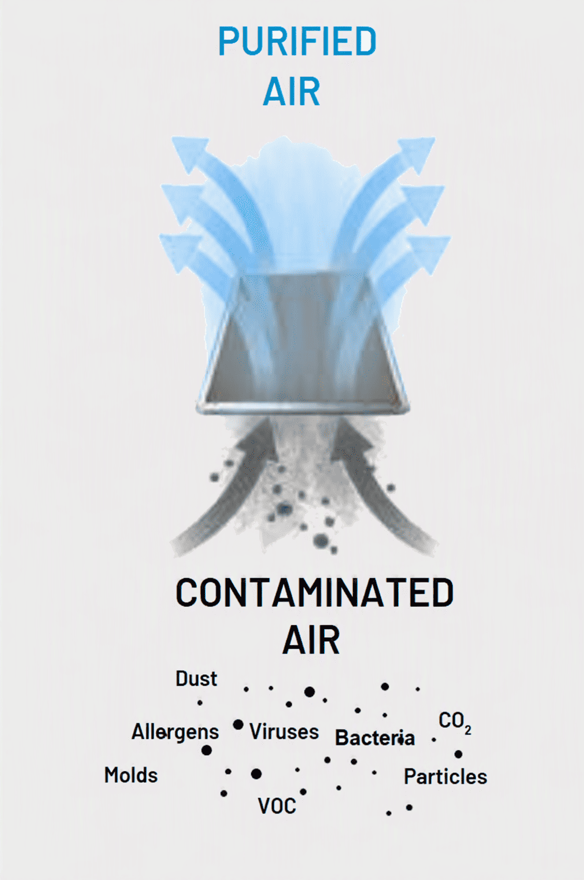
1. Air enters the treatment systemAir passes through a MARCC module integrated into an HVAC system, fan coil unit or professional stand-alone solution, where the treatment process begins. 2. Biological contaminants are controlledMARCC’s antimicrobial functionalisation acts on microbiological contaminants carried by the airflow, supporting the control of bacteria, viruses and mycetes. 3. Selected pollutants and odours are treatedIn photocatalytic configurations, UVA-activated photocatalysis helps treat selected VOCs, NOx and persistent odours, contributing to improved indoor air quality. 4. Cleaned air returns to the environmentThe treated air continues through the ventilation system and is recirculated into the occupied indoor environment, enabling continuous air treatment. |
 |

LARGE EXHIBITION & OFFICE ENVIRONMENT80% reduction in airborne bacterial load and 70% reduction for mycetes within less than 36 hours. A pilot installation in a large exhibition and office environment demonstrated MARCC’s ability to improve indoor air quality in high-occupancy spaces. Air sampling carried out before and after activation showed a significant reduction in airborne bacterial and molds contamination, highlighting the technology’s effectiveness in creating cleaner indoor environments while supporting healthier and more comfortable workplaces. |

PASSENGER RAIL APPLICATIONMARCC technology was evaluated in passenger rail coaches operating under real-world service conditions. The trial delivered a substantial reduction in airborne bacterial concentration during normal occupancy, demonstrating reliable performance in a demanding, high-traffic environment. The results highlight the potential of MARCC to support cleaner air and enhanced passenger comfort across public transport applications. |
Why Organisations Trust MARCC |
MARCC has been evaluated for safety, material integrity and indoor air compatibility through multiple testing programmes. • No PFAS detected in the tested filter media. • No detectable silver particle release under reported test conditions. • No cytotoxicity observed during testing. • Designed to treat air without releasing harmful by-products into occupied indoor environments. |
MARCC has been engineered with a low-pressure-drop design to minimise additional airflow resistance when integrated into HVAC systems. Energy demand varies depending on the selected configuration, with BioControl requiring no electrical activation and photocatalytic solutions requiring power for the light-activation system.
In some applications, active treatment of recirculated air may support HVAC optimisation strategies based on increased recirculation and reduced outdoor-air conditioning requirements.
Talk to our specialists about your application, filtration requirements and the air filters you need. We’ll help you identify the appropriate solution and provide a quotation.
17.11.2026
In hospitals, clinics, and care facilities, the air patients and staff breathe can contain contaminants from both everyday activities and…
16.11.2026
Proprietary Rotary TIG Welding Technology combines the advantages of TIG welding with greater flexibility for wire-based metal Additive Manufacturing Frankfurt,…
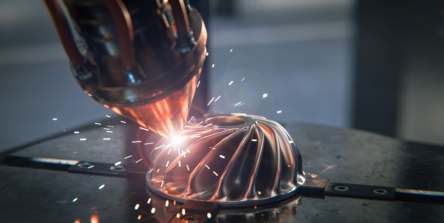
10.11.2026
Producing a metal component through additive manufacturing requires careful control of the material and its surrounding atmosphere. From powder production…