


- 3D Printing Gases: Argon in Additive Manufacturing
3D Printing Gases: The Role of Argon in Additive Manufacturing
Producing a metal component through additive manufacturing requires careful control of the material and its surrounding atmosphere. From powder production to final heat treatment, exposure to oxygen and moisture can affect the quality of the finished part.
Industrial gases help manufacturers control these conditions, with argon playing a central role, providing protective atmospheres across several stages of production.
This article explains where gases are used, why argon is a key choice, and how Nippon Sanso’s 3DPro® portfolio supports atmosphere control throughout the additive manufacturing chain.
What Is Additive Manufacturing?
Additive manufacturing builds a component by adding material layer by layer from a digital design. This approach enables complex geometries and can reduce the amount of material removed during subsequent machining.
The term covers several technologies using materials including polymers, ceramics, and metals. In metal additive manufacturing, feedstock may take the form of powder, wire, or a metal-filled material that requires later sintering.
For many of these routes, the surrounding atmosphere is a critical process variable. Metals exposed to oxygen and moisture during processing can become contaminated, affecting the finished component, and industrial gases help create the conditions needed to protect the material.
Their role in additive manufacturing extends from producing and storing the feedstock to building the part and carrying out subsequent treatments. Understanding that complete chain is essential when selecting 3D printing gases and the systems that deliver them.
Which Additive Manufacturing Processes Use Gases?
Gas requirements depend on how each technology forms the component.
Laser powder bed fusion (PBF-LB) uses a laser to melt selected areas of successive layers of metal powder. Often described as selective laser melting (SLM), this process takes place in a chamber with a controlled atmosphere, commonly using argon. Gas flow also helps carry away fumes and particles generated during melting. Both atmosphere composition and gas movement therefore matter to the build.
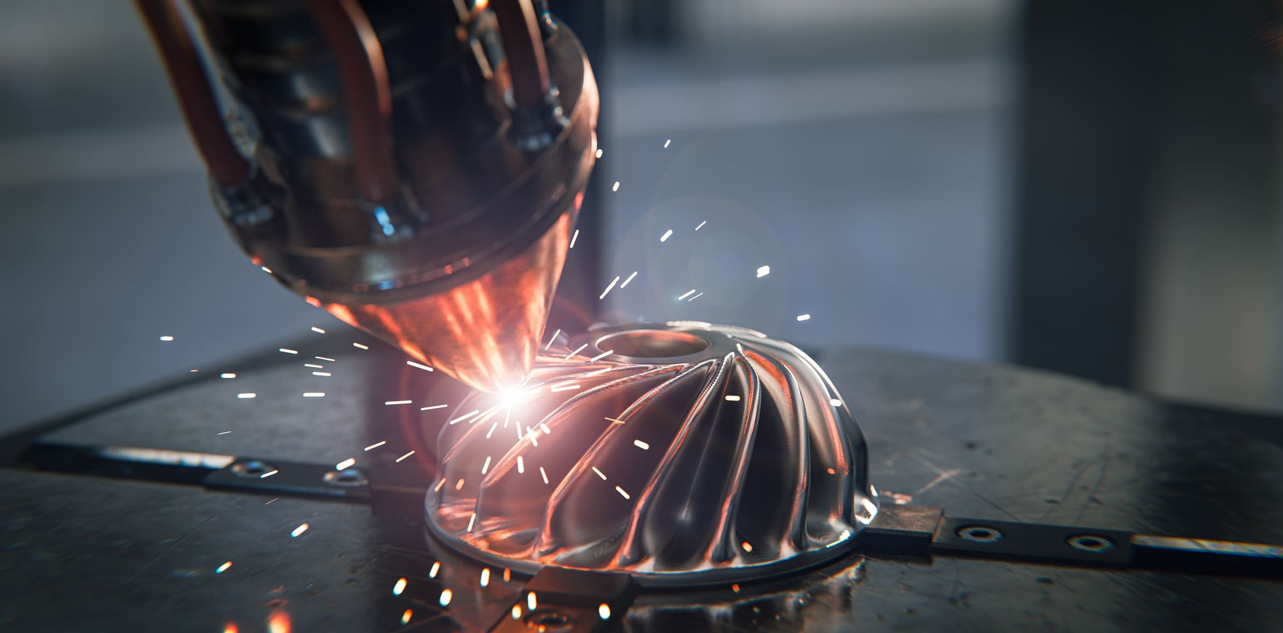
Directed energy deposition (DED) melts material as it is supplied to the deposition area. In laser-based systems, shielding gas protects the molten metal. Powder-fed systems can also use gas to transport powder to the deposition point.
Wire arc additive manufacturing (WAAM) is a form of DED that uses an electric arc and wire feedstock, and techniques include MIG/MAG, TIG, and plasma arc processes. Shielding gases or mixtures must suit the metal and arc process, supporting stable deposition and protecting the material.
Metal binder jetting and bound-metal material extrusion form parts that undergo subsequent furnace processing, with gases playing an important role in the sintering atmosphere. This differs from supplying shielding gas directly to a molten pool during printing.
Where Gases Are Used Throughout the Manufacturing Chain
The gas requirements of an additive manufacturing operation begin before the printer starts.
Feedstock Production
Gas atomisation uses gas to break up a stream of molten metal into powder, with argon commonly used when an inert atmosphere is required. At the high temperatures involved, oxygen can react with the metal to form oxides, while nitrogen can form nitrides in susceptible alloys. Both reactions can contaminate the powder and compromise the quality of the final component.
Feedstock Storage and Handling
Fine metal powders have a large surface area exposed to the surrounding atmosphere, making protection from oxygen and moisture important. Controlled storage helps preserve powder quality before it enters the machine.
An inerted cabinet can maintain a protective storage atmosphere using high-purity gas. Material handling procedures should also account for exposure during opening, transfer, and the storage of recovered powder intended for reuse.
Preparing the Working Atmosphere
Before a laser powder bed fusion build, the chamber is purged to displace air and reach the specified processing conditions. The required atmosphere must then be maintained throughout production.
Gas selection alone does not establish those conditions, with chamber sealing, distribution equipment, and gas flow all influencing the atmosphere that reaches the material.
Protecting the Build
During production, gases protect the powder, molten pool, and hot deposited material, depending on the technology. In powder bed fusion, gas circulation also removes process emissions from the build area.
Supply continuity matters over the entire build. The installation must deliver the specified gas quality, pressure and flow for the duration of the process.
Post-Processing
Gas use can continue after the component has been formed. Protective atmospheres may be required during heat treatment, while sintering-based routes require a furnace atmosphere compatible with the material and processing cycle.
The appropriate atmosphere may be inert or may use a purpose-designed mixture. For example, Nippon Sanso offers Sanarc® H3 for the sintering stage of metal binder jetting and bound-metal extrusion processes.
Why Argon Is a Key Gas for Metal Additive Manufacturing
Argon is a noble gas with very low chemical reactivity, making it particularly useful when hot metals need protection from the surrounding air. Its applications include powder atomisation, chamber inerting and shielding during deposition.
This broad usefulness makes argon a central gas across many metal additive manufacturing operations. However, the correct gas must still be selected for the alloy, equipment and processing stage.
Nitrogen is an option for some compatible materials, including certain austenitic stainless steels, but it can react with other metals at elevated temperatures. It should therefore not be treated as interchangeable with argon.
Gas quality must also be preserved between the supply and the point of use. A high-purity argon supply cannot compensate for contamination introduced through an unsuitable delivery system.
Oxygen and Moisture: Two Threats to Material Quality
Oxygen and moisture require attention throughout the chain because contamination can occur before, during or after printing.
Oxygen can oxidise metal surfaces during processing. In a layer-by-layer build, oxidised material can become incorporated into the component, affecting its quality.
Moisture can contaminate stored powder and contribute to an unsuitable processing atmosphere. For example, moisture and oxygen uptake in AlSi10Mg aluminium powder can reduce its spreadability, produce a less dense powder bed and contribute to porosity during melting. The required controls depend on the material and manufacturing route.
Measuring only the purity of the incoming gas leaves part of the picture unexamined. Storage conditions, gas delivery, and the atmosphere inside the machine all need attention.
Oxygen and moisture should also be considered separately: monitoring one does not establish the level of the other. Their limits should follow the requirements of the material, equipment and qualified process rather than a single target applied to every application. This makes purification and gas purity monitoring practical tools for controlling production conditions.
3DPro®: Gases, Equipment, and Support for Additive Manufacturing
Nippon Sanso’s 3DPro® portfolio brings together products and services developed specifically for additive manufacturing. Its solutions address gas quality, delivery, powder storage and atmosphere control.
The portfolio includes:
- High-purity gases: including argon, selected for the material and process.
- Dry Gas Tube: multilayer gas delivery hoses.
- 3DPro® Purifier: cartridges using Nanochem technology to remove traces of oxygen and moisture.
- Powder Dry Cabinet: controlled, inert storage for metal powders.
- MiruGas®: monitoring and analysis of gas-related process parameters, consumption and supply traceability.
- 3DPro® Recirc Advance System: purification of recirculating gas in powder bed fusion printers to reduce oxygen and moisture impurities.
Nippon Sanso’s specialists can help assess gas compatibility, delivery requirements and the equipment needed at each stage. This connects the gas supply to the wider task of maintaining controlled manufacturing conditions.
Contact Nippon Sanso to discuss 3DPro® solutions for your additive manufacturing process, from feedstock protection to post-processing.