


- Dry Ice Lifespan: What Affects Sublimation and Storage Time
How Long Does Dry Ice Last? Storage Time and Key Factors
Dry ice is used for everything from food storage and cold-chain shipping to industrial cleaning and special effects.
However, estimating its lifespan is not as simple as applying a standard hourly rate. This guide explains how long dry ice lasts, the factors that affect sublimation, and how to plan storage and quantities for different applications.
How Long Does Dry Ice Last?
Dry ice does not have a fixed lifespan. How long dry ice last depends on factors such as:
- Quantity
- Dry ice format
- Surrounding conditions
- Container design
- Container condition
- Pellet size
- Surface area
A practical baseline for estimating sublimation is that dry ice loses approximately 10 pounds every 24 hours in a typical insulated cooler. Assuming all factors equal, that means 5 pounds of dry ice could provide approximately 12 hours of storage, and 15 pounds could provide roughly 36 hours of storage. (Note: These factors are estimates and there are a variety of factors that need to be considered to calculate an exact lifespan.)
A commonly used estimate places dry ice loss at approximately 3%–8% per day. However, this range is best used as a general planning reference, not a hard and fast rule. The shape of the dry ice, container design, and storage environment also can significantly impact the actual sublimation rate.
Factors That Affect How Long Dry Ice Lasts
As we’ve noted, the type of container used to store dry ice significantly impacts its lifespan. However, at a granular level, there are more specific factors to consider.
Insulation quality of the container
Better insulation slows the transfer of heat into the container, which helps dry ice last longer. Studies show that, all other factors equal, a container with thicker, higher quality insulation will extend the lifespan of dry ice longer than lower quality or thinner insulation.
Practically speaking, a container specifically designed for dry ice, with thick, intact insulation and a lid that fits properly, will preserve dry ice the longest.
Size and shape
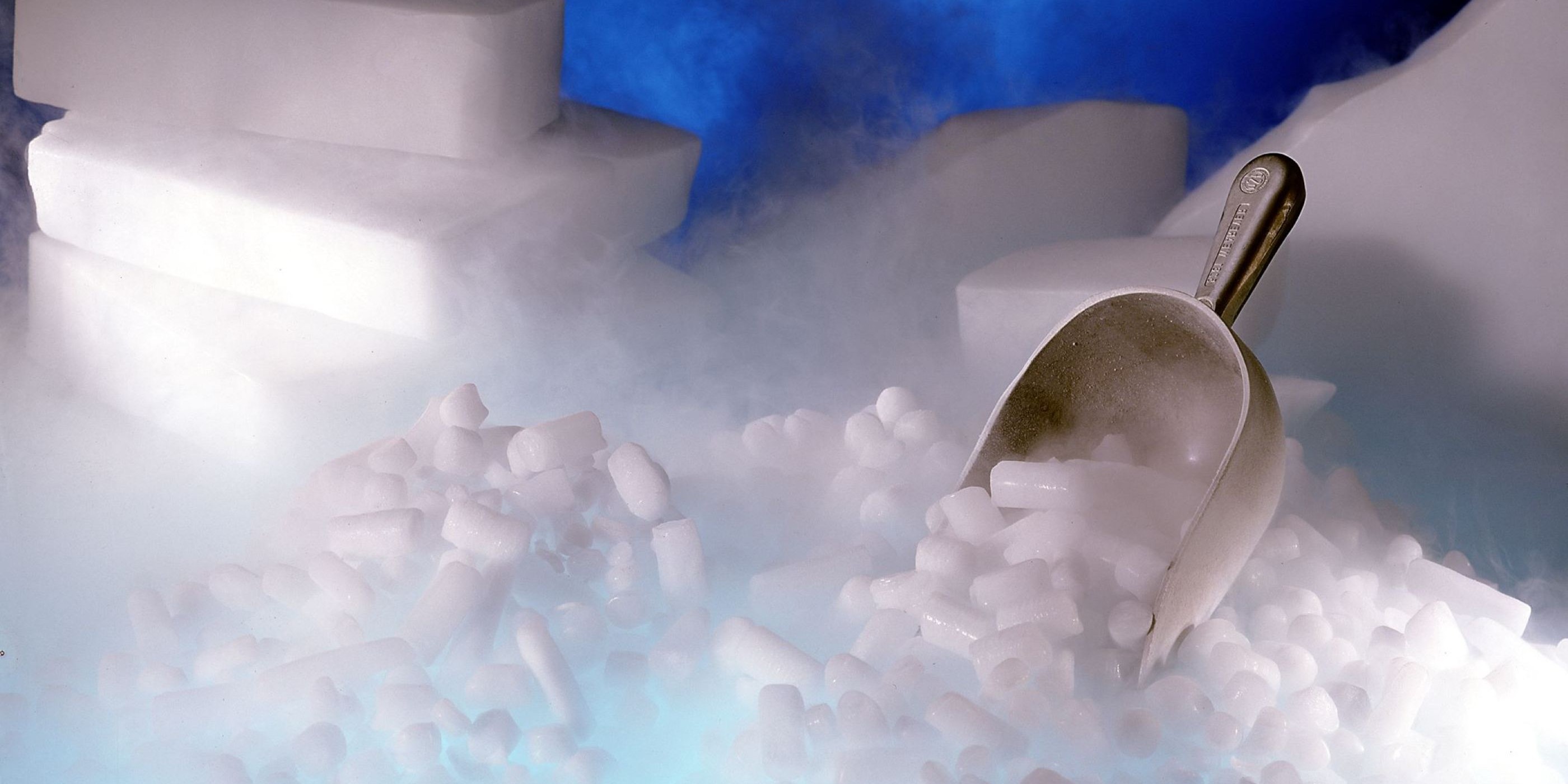
Two equal weights of dry ice can sublimate at different rates depending on their form. Pellets divide the dry ice into many small pieces, exposing more total surface area to surrounding heat. A single large block has less exposed surface area relative to its volume, so it generally sublimates more slowly and is better suited to applications where longer storage is the priority.
Pellet size also makes a difference. Smaller-diameter pellets sublimate faster than larger pellets because their surface-area-to-volume ratio is higher.
Frequency of container opening
Opening the container allows warmer outside air to enter, increasing the amount of heat the dry ice must absorb. The longer or more frequently the lid remains open, the more quickly the dry ice may sublimate and the harder it becomes to maintain a consistent internal temperature.
Airflow and exposure
When dry ice is directly exposed to moving air, it generally sublimates faster. Higher airflow speeds increase the dry ice’s surface temperature and sublimation rate, while airflow direction can also affect how quickly it is consumed.
Dry ice exposed to fans, drafts, or outdoor wind will therefore generally have a shorter lifespan than dry ice protected inside an insulated container.
Best Practices to Extend Dry Ice Lifespan
There are a number of specific actions you can take to make your dry ice last longer.
Use a thick insulated cooler
Store dry ice in a compatible, well-insulated container designed to withstand its extremely low temperature.Effective insulation limits heat transfer into the container and slows sublimation, while the container must still allow carbon dioxide gas to escape.
Do not use a household refrigerator or freezer as a dedicated dry ice storage container. Dry ice can, however, be placed in a freezer temporarily to keep food cold during a power outage. This is a short-term food-preservation measure, not a method for storing the dry ice itself.
Minimize empty air space
Fill unused space with newspaper, wadded paper, or another insulating material. Reducing void space limits heat transfer and can help slow dry ice sublimation.
Position the filler so it does not obstruct the container’s ability to release carbon dioxide gas.
Keep the lid closed
Keep the container covered whenever access is not required, but use a loose-fitting or properly vented lid rather than creating an airtight seal. Organize the contents beforehand so items can be retrieved quickly and the container spends less time open.
Store it in a cool, well-ventilated area
The storage area must have sufficient ventilation to prevent carbon dioxide buildup. Dry ice should not be stored in confined or poorly ventilated spaces such as closed vehicles, small rooms, walk-in coolers, or other enclosed areas.
Wrap dry ice in paper or cardboard
Paper, newspaper, a towel, or cardboard can provide another insulating layer around dry ice. Wrapping the dry ice can reduce its direct exposure to warmer air and surfaces, helping slow heat transfer and sublimation. Use a loose wrapping that does not create an airtight enclosure or prevent carbon dioxide gas from escaping the container.
Planning Quantities Based on Use
Use the following guidelines to help you determine how much dry ice you need.
Short events and catering
Short events generally require less dry ice than multi-day shipping or storage applications. Purchasing it close to the event can reduce the amount lost before use begins.
The amount required will depend on the cooler, starting quantity, duration, and frequency of access. Dry ice should not be placed in beverages where someone could swallow it, as ingestion can cause severe internal injury.
Shipping and cold-chain operations
Shipping plans should account for required temperature, transit time, potential delays, packaging performance, dry ice geometry, and the expected sublimation rate. Because container and dry ice performance vary, temperature-sensitive packaging systems should be tested under conditions that represent the intended route.
Dry ice shipments may also be subject to packaging, marking, documentation, and quantity requirements. For example, under 49 CFR § 173.217 covered air and water shipments must use packaging that releases carbon dioxide gas and prevents dangerous pressure buildup.
Industrial cleaning
Dry ice blasting commonly uses pellet or high-density pellet formats. Because dry ice pellets gradually shrink during storage, industrial cleaning operations should plan each order around the amount of cleaning scheduled and arrange delivery shortly before the work begins.
Theatrical and special effects
Adding dry ice to warm or hot water accelerates sublimation and creates visible fog from condensed water vapor mixed with carbon dioxide. Hotter water produces more fog but also consumes the dry ice faster.
Production teams should estimate how much dry ice they need based on the number of scenes or effects, how long each one lasts, and when it will take place. Testing before the event can also show how quickly the dry ice will be used.
Safety Considerations During Storage
It is essential to take the following precautions when storing dry ice:
- Never store dry ice in an airtight container: Carbon dioxide can accumulate and create enough pressure to rupture or explode a sealed container.
- Do not use a household freezer for routine dry ice storage: Unventilated refrigerators and freezers can also allow carbon dioxide to build up.
- Wear insulated gloves: Dry ice is cold enough to cause severe frostbite if it touches bare skin.
- Ensure adequate ventilation: Carbon dioxide gas can accumulate in confined or poorly ventilated spaces and displace breathable air.
- Dispose of unwanted dry ice safely: Do not place it in sinks, toilets, drains, or enclosed trash containers.
Reliable Dry Ice Supply for Time-Sensitive Operations
Choosing the right dry ice format is an important part of supply planning. Blocks can support longer holding periods, while pellets can provide greater surface contact or meet the requirements of dry ice blasting equipment.
Transport conditions also matter. Properly insulated and vented packaging, along with delivery scheduled close to the time of use, can help reduce dry ice loss.
Nippon Sanso offers food-grade dry ice in standard block, cut-block, Airport Cut, pellet, and high-density blasting formats. Insulated bulk containers are available, as well as multiple packaging and delivery options.
Nippon Sanso in Europe has completed, through its UK subsidiary Nippon Sanso UK Ltd, the acquisition of Ashe Buchanan Associates Ltd, the holding company of Chillstick Ltd. and Frozen Delivered Ltd.
Together, the businesses bring complementary expertise across dry ice production, frozen storage, order fulfilment and last-mile delivery enabling customers to access broader support across the cold chain.
Contact Nippon Sanso to discuss the dry ice format, quantity, packaging, and delivery schedule appropriate for your operation.