



Lignovalue Pilot Project
Innovation in the Chemical Industry
Replacing fossil-based products with bio-based, high-performance and safe alternatives is a major economic challenge for the European chemical industry. Several studies have identified lignin present in biomass (such as wood, grass, straw and maize straw) as a valuable alternative for chemical production, specifically to replace current fossil-based aromatic building blocks.
Aromatic building blocks derived from lignin are also known as bio-aromatics. Following the implementation and validation of the technology platform for the production of bio-aromatics on a laboratory scale, the next step was to design and develop a pilot plant on a scale relevant to industry, in order to demonstrate the process and produce sufficient quantities of the bio-aromatics for the further development of applications.
Lignin, an unknown potentialLignin is mass produced as a by-product in, for example, the current pulp and paper industry and bioethanol production. Most of it is currently incinerated and thus only valorised energetically. However, because of its naturally present aromatic structures and functionalities, lignin has much more potential for the production of bio-aromatics, which could lead to innovative developments in the chemical industry. In the future, this could lead to the realisation of new lignin-based value chains. VITO is currently working in several projects with both national and international partners to bring these bio‑aromatics and their derived applications closer to the market.
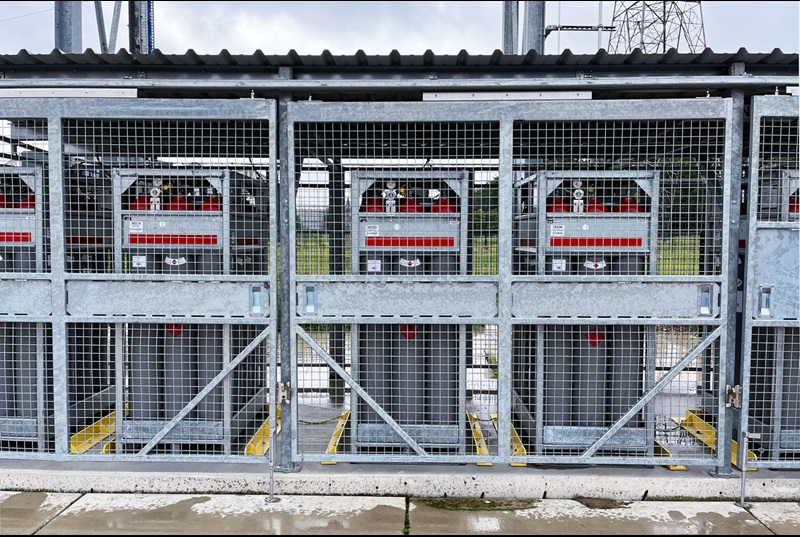
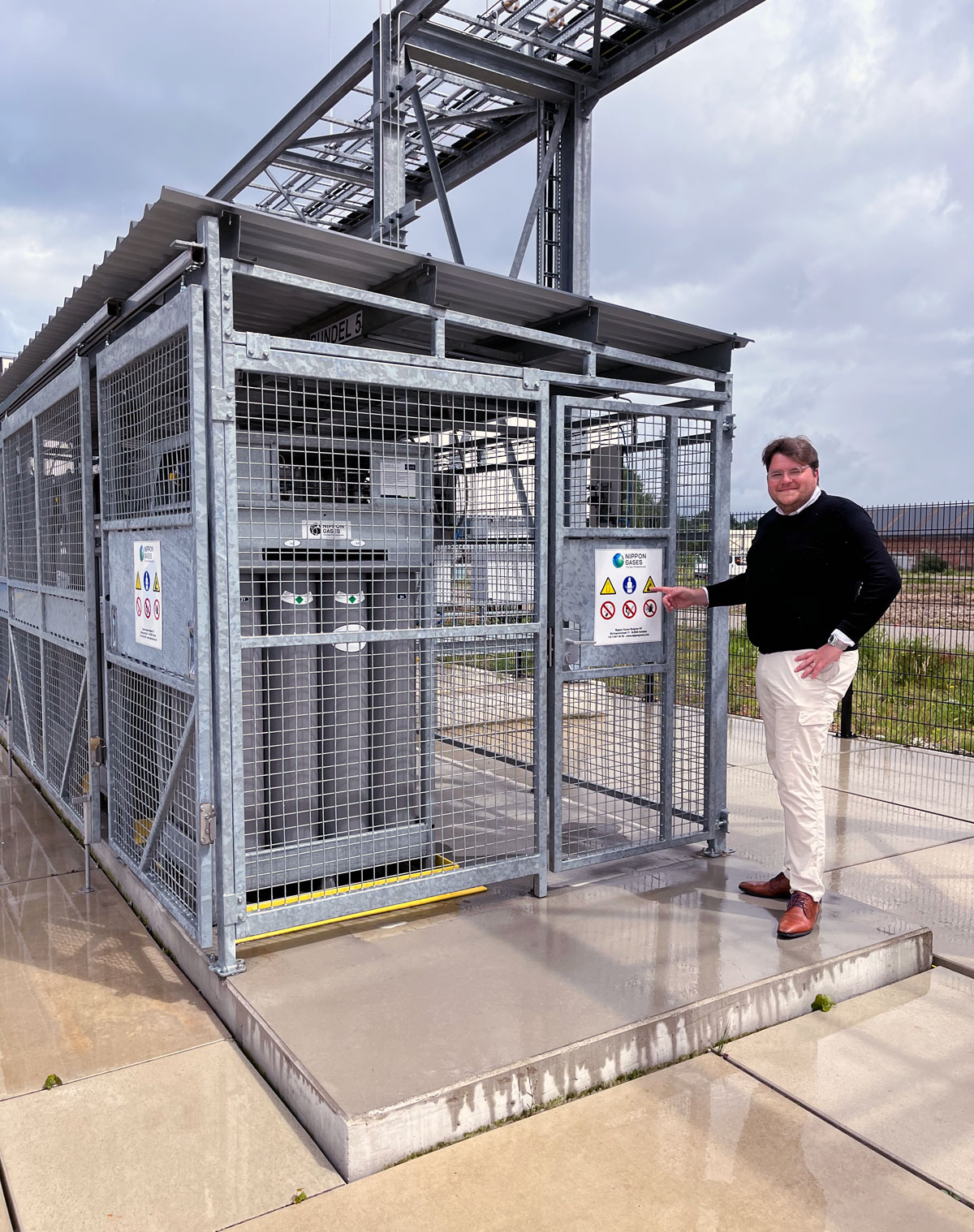
Role of Nippon Gases BelgiumNippon Gases Belgium supplies hydrogen and nitrogen for the catalytic hydrogenolysis process of lignin, where the lignin is cut into smaller building blocks. Hydrogen plays a crucial role in breaking down large lignin molecules to stabilise the smaller aromatic structures formed. Nitrogen is mainly used for inerting the pilot plants. Jarne Van Belleghem, Sales Development Engineer Specialty Gases, and Stefan Van Wauwe, Application Engineer, were closely involved with this project. |
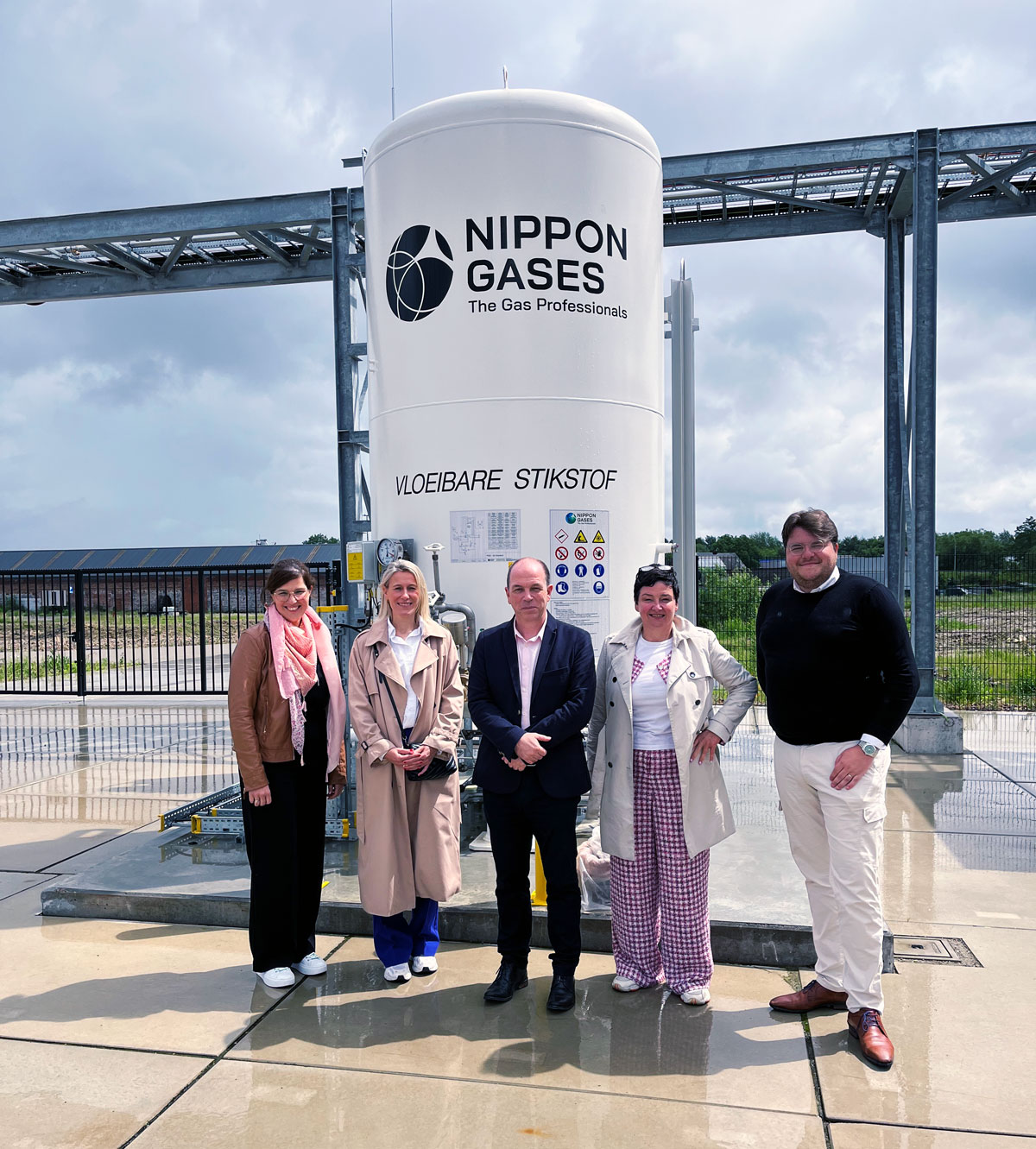 |
The result was a highly constructive collaboration between Nippon Gases and VITO, which produced excellent work on the storage of hydrogen and nitrogen bundles. Nippon Gases is committed to finding sustainable solutions for the future, and the collaboration with VITO is a fine example of this. With this project, VITO has in turn demonstrated that lignin, an abundant natural raw material, can serve as the basis for products that currently rely on petroleum. This offers a promising future for a sustainable chemical industry.
ABOUT VITO
VITO is an independent Flemish research organisation in the field of cleantech and sustainable development, headquartered in Mol, Belgium. They work on global projects to promote the transition to sustainability. At VITO, they create innovative technological solutions and actively share their knowledge with companies and governments. To maximise its impact on a sustainable society, VITO positions itself in 3 main areas: sustainable resource economics, climate adaptation & mitigation and sustainable living. In this way, VITO not only supports the future vision of Flanders but also the Sustainable Development Goals of the United Nations.
Their vision
-
Accelerating the transition to a competitive, clean and safe energy system in Flanders and worldwide
-
Introduce short material cycles to set up global ecosystems for a circular economy
-
Radically reduce the use of fossil raw materials and energy in the Flemish chemical sector
-
Enable innovative, preventive and affordable healthcare, supported by measurement tools and data
-
Promote sustainable land and water use and link it to healthcare and agriculture
The multidisciplinary Materials and Chemistry business unit (MATCH) works on the use of alternative raw materials, including both bio-based, circular and CO2-based raw materials, such as lignin to create new value chains. The Sustainable POlymer Technologies research team (SPOT, https://spot.vito.be/en) has been working on lignin since 2012 and has continuously improved its expertise both in lignin processing and application development (polymers). VITO has also established Biorizon, a joint research centre focusing on technology development for the production of functionalised bio-based aromatics for high-performance materials, coatings and chemicals. In this context, in 2018 VITO launched the LignoValue Pilot project aimed at designing and building a pilot plant for the depolymerisation of lignin into a blend of bio-based aromatics.