


- Madrid
- Why Dry Ice Blasting Is Effective for Car Cleaning and Restoration
How Dry Ice Blasting Cleans and Restores Cars
In many automotive shops, cleaning is one of the most time-consuming parts of the job. Removing grease from an engine bay, stripping old coatings, or preparing a surface for repainting usually involves water, chemicals, or hours of manual effort.
Dry ice blasting offers a different approach. Instead of soaking or scrubbing, it uses solid CO₂ pellets to lift contaminants cleanly from the surface. For auto professionals working on modern vehicles or detailed restorations, dry ice blasting for cars provides a faster, more controlled way to get consistent results.
In this guide, we explain how dry ice blasting works, where it fits into automotive workflows, and why it is becoming a preferred method for cleaning and restoration.
What is dry ice blasting?
Dry ice, like that supplied by Nippon Sanso, is used across a wide range of industries due to its ability to provide efficient cooling and cleaning without leaving residue.
Dry ice blasting is a cleaning process that uses solid carbon dioxide (CO₂) pellets propelled by compressed air. When these pellets strike a surface, they break apart contaminants without leaving behind any residue.
How the process works
The effectiveness of dry ice blasting comes from three combined effects:
- Impact energy loosens dirt, grease, and coatings
- Thermal shock causes contaminants to contract and detach
- Sublimation turns dry ice into gas instantly, lifting debris away
Because the dry ice disappears on contact, there is no secondary waste to clean up. This makes it especially efficient compared to traditional blasting methods.
How it differs from traditional cleaning methods
Dry ice blasting addresses many of the limitations found in pressure washing and chemical cleaning.
Compared to pressure washing
Pressure washing relies on water and force, which can introduce moisture into critical areas. In automotive applications, this creates risks such as corrosion or electrical issues, particularly in engines and older vehicles.
Dry ice blasting avoids these concerns entirely. There is no water intrusion and no drying time required before continuing work.
Compared to chemical cleaning
Chemical cleaning uses solvents to dissolve grease and grime. While effective, it often leaves residues and requires careful handling and disposal.
Dry ice blasting eliminates the need for chemicals. The process is non-toxic, leaves no residue, and reduces environmental impact.
As ScienceDirect notes in its research on dry ice blasting, the process cleans effectively without producing secondary waste or relying on water or chemical solvents.
It also creates a safer working environment for technicians.
Why dry ice blasting works so well for cars
Vehicles are made up of a wide range of materials and tightly packed components. Cleaning them thoroughly without causing damage is a constant challenge.
This is where dry ice blasting for car applications stands out.
Safe for a variety of surfaces
Dry ice is non-abrasive, which means it cleans without wearing down the underlying material. When properly controlled, it can be used on metal, plastic, rubber, and painted surfaces.
This makes it suitable for both modern vehicles and classic cars, where preserving original materials is often critical.
Effective on stubborn contaminants
Dry ice blasting is particularly effective at removing:
- Oil and grease buildup
- Road grime and tar
- Old paint and coatings
- Adhesives and residues
It does this without grinding or scratching the surface, which is a major advantage over more aggressive methods.
Ideal for complex and hard-to-reach areas
Automotive components are often difficult to access with traditional tools. Dry ice blasting can reach into tight spaces and clean intricate parts without requiring extensive disassembly.
This not only improves cleaning results but also reduces labor time.
Key Benefits for Automotive Cleaning and Restoration
- Surface-safe cleaning: Removes contaminants thoroughly while preserving the integrity of metal, plastic, rubber, and painted surfaces.
- No secondary waste: Dry ice sublimates on impact, leaving only the removed dirt and debris to clean up.
- Environmentally responsible: Eliminates water runoff and chemical waste, supporting cleaner and more sustainable operations.
- Faster turnaround: Requires minimal setup and no drying time, allowing technicians to move quickly between stages.
- Safer working conditions: Reduces exposure to harsh solvents and avoids hazards associated with wet surfaces.
Practical applications in automotive work
Dry ice blasting is used across a wide range of automotive tasks, from routine maintenance to full restoration projects.
Body shops and surface preparation
In body shops, dry ice blasting is often used to remove paint and prepare surfaces for refinishing. It can strip coatings without warping panels or damaging the underlying material, making it ideal for repainting work.
Engine and mechanical cleaning
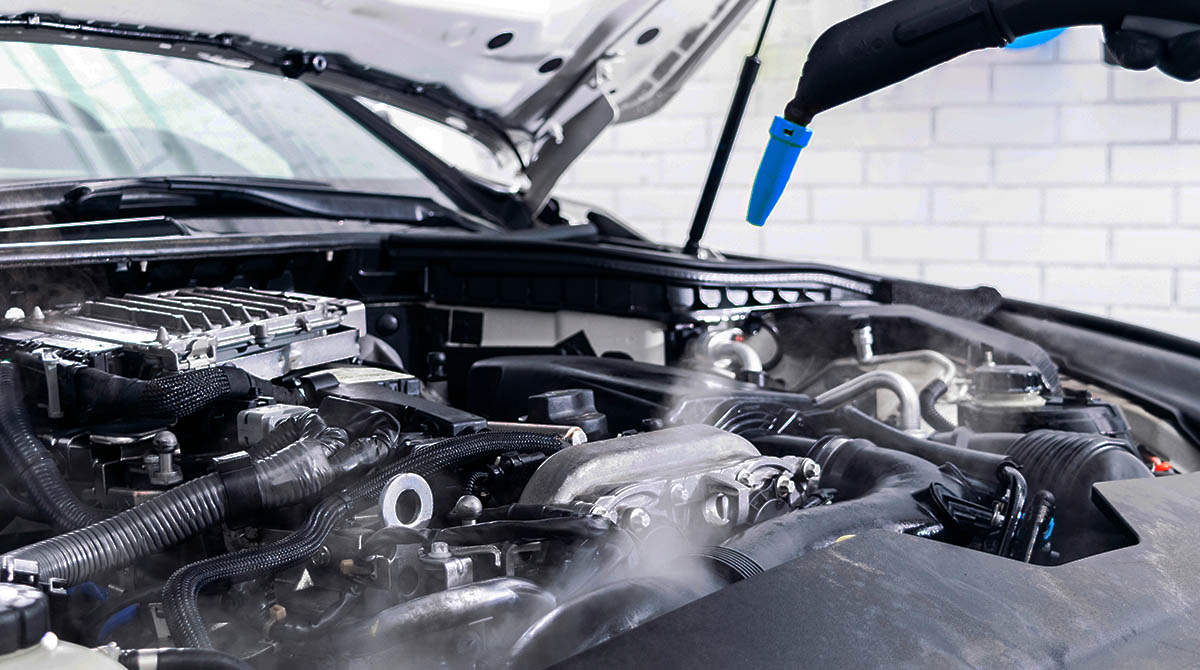
Engines and mechanical components accumulate layers of oil, grease, and debris over time. Dry ice blasting can remove these contaminants effectively without introducing moisture, reducing the risk of damage to electrical systems.
Classic car restoration
For restoration specialists, dry ice blasting provides a way to clean and restore vehicles while preserving original parts. It can remove decades of buildup without compromising delicate materials, which is especially valuable in vintage projects.
Wheels, brakes, and detailed components
Dry ice blasting is also well suited for cleaning wheels, brake systems, and other detailed components. These areas are often difficult to access and heavily soiled, making traditional cleaning methods less effective.
Ensuring Consistent Performance and Safety
While the process itself is straightforward, achieving consistent results depends on proper setup and operation.
Reliable dry ice supply
The quality of dry ice plays a key role in performance. Consistent pellet size and density help ensure even cleaning and predictable results across different applications.
Proper equipment and technique
Adjusting air pressure, nozzle type, and blasting distance allows technicians to tailor the process to specific surfaces and contaminants. This level of control helps maximize effectiveness while minimizing risk.
Safe handling and operation
Although dry ice blasting is non-toxic, it still requires proper safety measures. Adequate ventilation is important because carbon dioxide can displace oxygen in enclosed spaces. With the right precautions, it remains a safe and controlled cleaning method.
Nippon Sanso dry ice solutions for automotive applications
For workshops looking to adopt this technology, a reliable dry ice supplier is essential.
Nippon Sanso provides high-quality dry ice solutions designed to support consistent performance in demanding automotive environments. With dependable supply and controlled production processes, technicians can rely on a steady stream of pellets that meet the requirements of precision cleaning.
Proper storage and handling are also important. Dry ice should be kept in insulated containers and used within appropriate timeframes to maintain effectiveness. Working with a trusted supplier like Nippon Sanso helps ensure these standards are met, supporting both efficiency and safety.
Final thoughts
As automotive maintenance and restoration continue to evolve, dry ice blasting is becoming an increasingly valuable tool.
It offers a way to remove tough contaminants without damaging surfaces, reduce waste, and improve working conditions. For body shops, detailing professionals, and restoration specialists, it provides a clear advantage over traditional methods.
Whether used for engine cleaning, paint preparation, or full vehicle restoration, dry ice blasting for cars delivers a practical, efficient, and environmentally responsible solution for modern automotive work.