


- Food-Grade Gases for Processing, Packaging and Preservation
How Are Food-Grade Gases Used in the Food and Beverage Industry?
Food and beverage production often requires careful control of temperature and exposure to air. A product may need cooling during processing, protection from oxygen during storage, or a specific atmosphere inside its packaging.
Food-grade gases help create these conditions. They can protect flavour during storage or support rapid freezing during production. In beverages, carbon dioxide provides the carbonation that gives a finished drink its fizz.
This article explains their main uses, what to consider when choosing a supplier, and how to manage transport, handling, and storage safely.
What Are Food-Grade Gases?
Food-grade gases are gases supplied at specifications and under controls appropriate for use in food production. They can be used as:
- Ingredients in finished products
- Processing aids
- Packaging gases
- Cooling and freezing agents
- Protective atmospheres during storage
Suitability involves more than the overall purity percentage. Purity percentage is an important factor in terms of suitability for food use, but there are other factors to consider as well.
The supply of gases for food use also requires attention to relevant impurities, hygiene, and traceability throughout production and distribution. A gas intended for another industrial application should not be assumed suitable for food contact.
Common examples include nitrogen, carbon dioxide, and oxygen. These gases serve different purposes, so selection depends on the food and the conditions required.
Main Uses of Food-Grade Gases
Food-grade gases serve different purposes throughout production and distribution. Here are some of the primary ways they help manufacturers control processing conditions and maintain product quality until food and beverages reach the customer.
Controlling Temperature During Food Processing
Processes like mixing and grinding can generate heat that changes a product’s consistency or makes it harder to handle. Controlled cooling helps manufacturers maintain the temperature needed for the next stage.
For example, carbon dioxide injection systems can introduce cooling during food preparation, including processes using kneading equipment. The amount introduced must match the product and production rate.
Cooling can also prepare a product for cutting. Partially freezing its outer surface, known as crusting, makes it firmer without requiring the entire product to be frozen, helping it withstand subsequent handling.
Supporting Food Preservation
Exposure to oxygen can affect susceptible foods during storage and transfer. Oils and fruit juices, for example, may need protection from oxidation before they reach their final packaging.
A nitrogen blanket above the product in a storage tank reduces its contact with air. This approach protects the product during bulk storage, while appropriate gas arrangements can also support transfers and filling operations.
The protective atmosphere must be maintained as the tank is filled or emptied. Gas selection therefore needs to be considered alongside the equipment and the way the product moves through production.
Packaging Food in a Modified Atmosphere
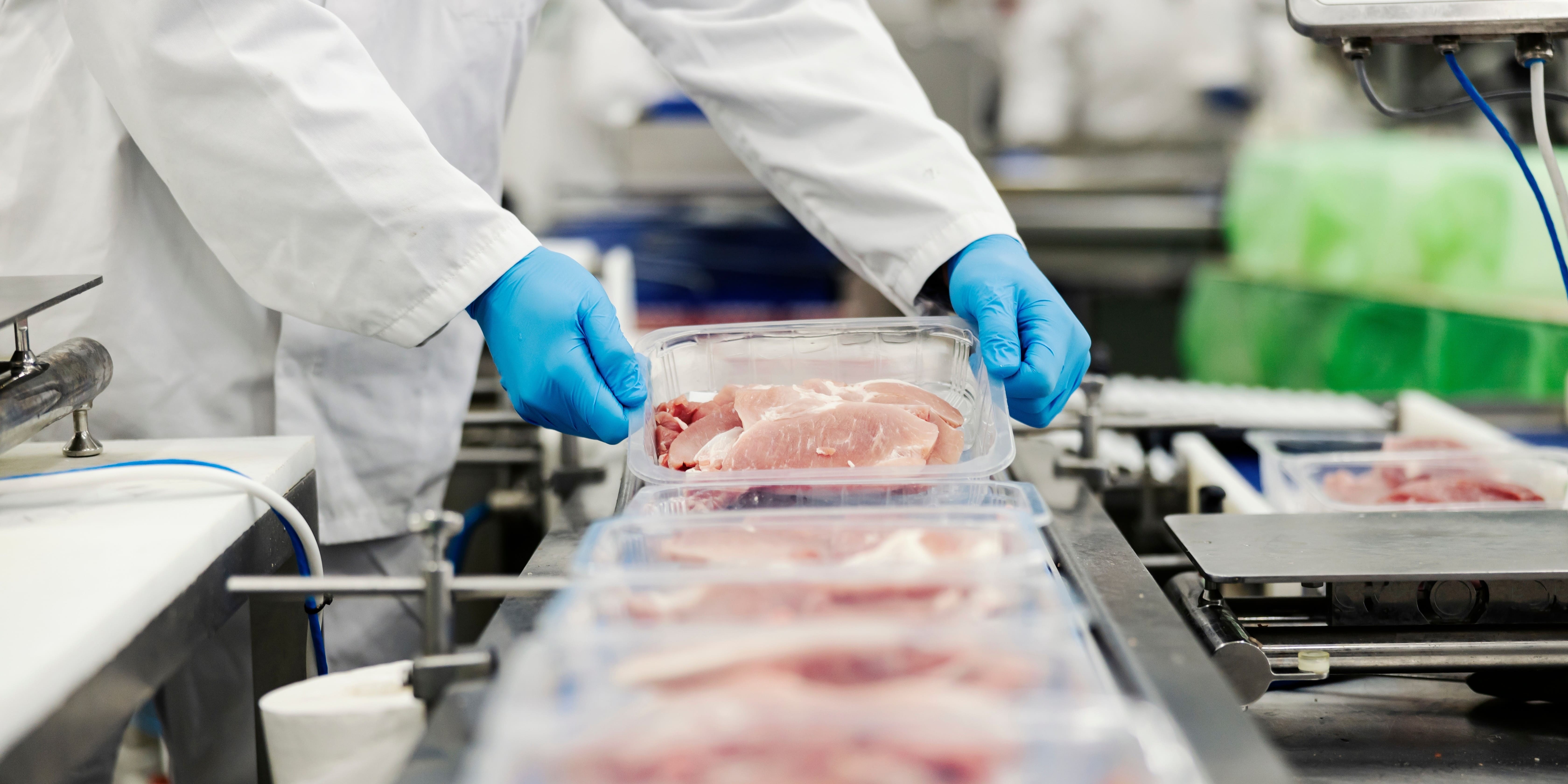
Modified atmosphere packaging (MAP) replaces the air inside a package with a selected gas or mixture. It is used for products such as fresh meat and bakery goods to help maintain quality during storage.
Each gas has a different role:
- Nitrogen displaces oxygen and can provide protective cushioning in snack packaging.
- Carbon dioxide can inhibit the growth of certain spoilage microorganisms.
- Oxygen is included in selected applications, including mixtures intended to maintain the red colour of fresh meat.
The mixture must suit the food and work with the packaging material, seal, and storage conditions. It cannot replace temperature control or a properly established shelf life. Guidance for chilled vacuum and modified atmosphere packed foods explains the controls needed to manage microbial risks throughout storage.
Cooling, Freezing, and Cold Chain Transport
Cryogenic systems use liquid nitrogen or carbon dioxide to remove heat rapidly from food. They can serve continuous production lines or batch operations, depending on the equipment and processing requirements.
Rapid freezing encourages the formation of smaller ice crystals, which can help preserve the structure and texture of foods such as fish or prepared meal
Cryogenic freezing equipment should be selected based on factors like:
- Product’s size
- Starting temperature
- Required throughput
- Necessary final product temperature
- Available space for installation
After production, dry ice can provide cooling during transport due to the fact that it changes directly from solid carbon dioxide into gas, leaving no meltwater. Insulated packaging slows heat transfer, while the quantity supplied and delivery timing should reflect the journey and required product temperature.
Producing and Dispensing Beverages
Carbon dioxide supplies the carbonation in sparkling water, soft drinks, beer and sparkling cider. Manufacturers control its addition to achieve the intended character of the beverage.
Gas use extends beyond carbonation. Carbon dioxide and nitrogen support beverage production and dispensing, including bottling and protective atmospheres. In brewing, carbon dioxide can be used to purge equipment and transfer beer under pressure, while nitrogen-containing mixtures serve selected dispensing applications.
Gas quality and delivery pressure should match the beverage and equipment requirements.
What to Look for in a Food-Grade Gas Supplier
When choosing a food-grade gas supplier, there are some key factors to look for.
Quality and Documentation
Ask for a gas specification appropriate to the application and an explanation of how conformity is checked. Supporting documentation should both identify the supplied product and provide traceability.
Quality also depends on the delivery system. Materials that contact food gases, including hoses and distribution components, need assessment for their intended use. Contamination introduced between storage and the production line can undermine the quality of the original supply.
Compliance and Traceability
The supplier should explain how its product meets applicable food-use requirements and provide the records needed for the customer’s food safety procedures.
Requirements depend on the gas, its role, and the market where it is used. Confirm these details before ordering, particularly when changing an existing application or introducing a new product.
Supply Reliability
Delivery arrangements should account for:
- Normal gas consumption
- Peak production demand
- Available storage capacity
- Delivery lead times
- Expected changes in production volume
Ask how the supplier handles urgent demand and what contingency arrangements are available if scheduled deliveries are interrupted.
A production line that depends on gas needs a plan for replenishment before its supply becomes a constraint. Review that plan when production hours or output increase.
Technical Expertise
Application support can help determine the appropriate gas mixture and operating parameters. Product trials can also help establish gas consumption before a new process is adopted.
For example, on-site cryogenic trials can help assess product quality and confirm working conditions under actual production conditions.
Safe Transport and Storage of Food-Grade Gases
Food-grade suitability does not remove the hazards associated with pressure, extreme cold, or gas accumulation.
ollow these practices when storing, transporting, and handling gas cylinders:
- Secure cylinders during storage and transport
- Protect valves from damage
- Use suitable cylinder handling equipment
- Ensure connections are compatible with the gas and operating pressure
- Train staff to follow the relevant procedures
Nitrogen can displace breathable oxygen, while elevated carbon dioxide concentrations can directly harm health and contribute to an oxygen-deficient atmosphere. Ventilation and monitoring should address the gases actually used, since an oxygen monitor alone does not establish that carbon dioxide exposure is safe.
Cryogenic materials require appropriate protection against cold burns and equipment designed to manage pressure safely. Food freezing and chilling safety guidance covers ventilation, gas monitoring, and emergency training. Staff should understand alarm responses before operating the system.
Food-Grade Gas Support for Your Next Stage of Production
Protecting product quality requires choosing the right gas. Additionally, the supply must meet food-use requirements and keep pace with production, while suitable equipment and safe handling procedures help maintain control from delivery to the point of use.
These needs can change as businesses introduce new products or expand their operations.
Nippon Sanso’s food and beverage solutions bring together gases, application equipment, and technical support to help businesses address these demands. From selecting a packaging atmosphere to planning cryogenic cooling, that support helps connect the gas supply to the process it serves.
Contact Nippon Sanso to discuss a gas supply and equipment arrangement suited to your current operation and future production plans.